
Raised beds are not new, but they are becoming increasingly popular, especially among amateur gardeners, because of the advantages of raised bed gardening. With healthy soil and proper care, raised beds can produce a large crop in a small space. Check out the other advantages of raised beds.
Cultivating vegetables and fruits in raised beds dates back at least to 300 BC, when people in the Andes protected their crops with raised beds to prevent erosion. Deep drainage channels were dug between individual beds. With today’s raised beds, it is not about digging canals into the ground to raise the bed, but quite the opposite. They are built from the bottom up, i.e., by piling earth.
Usually, tall beds are bounded with wood or some other material to keep the soil in place. Such raised beds began to be used in the Middle Ages, when farmers erected fences woven from branches around their gardens. This method of growing vegetables was popular among farmers in Paris in the 18th century. The concept then became popular in the early 1970s, when homeowners sought ways to grow their own vegetables, even in smaller gardens.
In recent years, more and more amateur gardeners are choosing this method of food production due to its many advantages.
Ten Most Essential Advantages of Raised Bed Gardening
1. Raised Beds Are Great for Beginners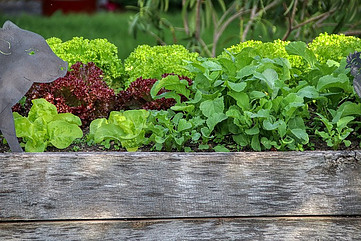
Raised beds make gardening easy, so they’re great for beginners. The initial investment is slightly higher than if you start gardening in the field, but it often guarantees successful vegetable production in the first year. Set up a box, add soil, some compost, and seeds, then water, and sure enough, something will grow. Cultivating a field usually requires more knowledge, effort, and time.
2. There Is No Need to Cultivate the Soil Too Much
Once established and filled, a raised bed requires much less work to prepare the soil before planting. Since the soil does not have to be cultivated year after year like in a field, it is a much easier way to garden. The soil must only be maintained by mixing fresh soil, compost, and fertilizers into the top layer. Don’t break your back by digging through the soil. Digging or plowing fields also exposes the soil’s organic matter to the sun’s rays, making the soil more impoverished over time. With high beds, organic matter only accumulates over the years as we do less work in the soil.
3. Good for Your Spine
Although gardening has many benefits for mental and physical health, tending the garden can also strain the back and knees. Especially if it is a larger cultivated area, for which we need more time for weeding and hoeing. You can avoid these problems with a raised bed because you don’t have to bend as much. The height of the beds can be adjusted to your body height, similar to a kitchen counter. This will ensure that your spine will not suffer during work. In addition to the height, the width of the raised bed is also essential, so it should be wide enough that you can reach across the middle of the bed from the two longer sides without much effort.
4. Better Drainage
Raised beds are a wise decision, especially in areas that are often flooded or where water stays in the ground for a long time after heavy rainfall. Raised beds improve drainage, ensuring crops grow better even in wetter areas. The usual height of a raised bed is between 70 and 100 centimeters, but it can also be lower. For most plants, this height provides enough space for drainage.
5. Raised Beds Make It Difficult for Pests to Access Crops
Raised beds can also provide your crops with additional protection from pests. Snails can climb, but the high sides will slow them down, and you can spot them before they even reach the top. Also, some gardeners notice that copper edging, often used to surround tall beds, deters slugs. A vole netting can be placed at the bottom of a tall bed to prevent voles, mice, and other rodents from reaching your crops from below. In addition, your plants are also protected from urination by nearby dogs and cats. You can also install additional protective fencing around the raised beds to keep deer, birds, and other animals out of your crops.
6. Fewer Weeds
In raised beds, it is less likely that grass or other weeds will start to grow, especially if you put a barrier (straw, cardboard, etc.) at the bottom of the bed. Raised beds can be covered with mulch, cardboard, or black plastic film in early spring. This prevents overwintering weeds from growing and multiplying. When it’s time to plant, remove the mulch and rake up the dead weeds.
7. You Can Start Planting in the Raised Bed Earlier
Better drainage, faster drying, and soil warming in raised beds mean you can start planting in them as early as early spring. Also, plants can survive longer in high beds in autumn, as the soil does not cool down as quickly. If the soil in the bed is enriched with compost, it regulates the temperature better. This way, you can extend the gardening season.
8. You Can Avoid Contaminated Soil
Urban gardening can pose a particular challenge, as the soil used to grow vegetables can be contaminated with heavy metals. With high beds, you can ensure that you grow crops in healthy soil you bring from elsewhere, which has not been exposed to contamination like the soil in your garden or field. You can also improve the soil in the high bed by adding compost, which, among other things, traps heavy metals and prevents them from being absorbed by the plants.
9. You Can Move Raised Beds Around
One of the advantages of raised beds is that they do not take up too much space on the ground and can be removed if necessary. Thus, they also consider tenants whose owners do not allow them to dig up the garden soil. The tall beams can be quickly emptied and taken with you after the move.
10. Raised Beds Can Be a Decorative Element
Raised beds are not only practical but also aesthetic. You can place the wooden boxes in various formations or use them to divide the garden into distinct corners in an elegant way. If you wish, you can also decorate, stain, and paint the wooden sides, but be careful to use harmless or natural colors. With them, you can also bring nature to the garden or courtyards, which are otherwise paved or concreted.