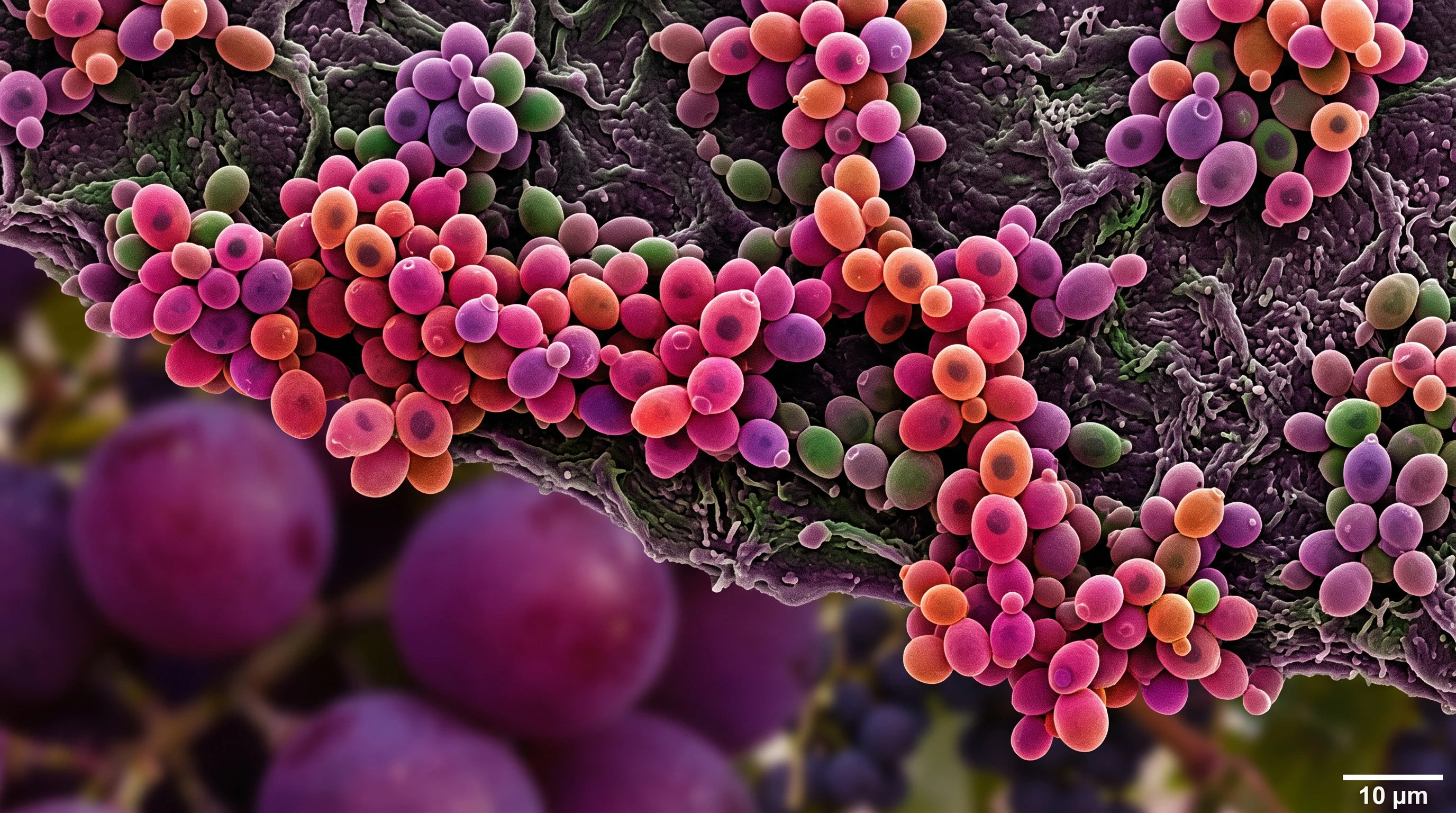
Yeasts play a central part in winemaking, shaping the flavors, aromas, and texture of the final product. If you ever wondered how grape juice turns into wine, yeast is the powerhouse behind the transformation. In this guide, I’m breaking down the different yeasts used in winemaking, why they matter, and how they drive the process from start to finish.
Why Yeasts Matter in Winemaking
Yeast is a living microorganism that eats up sugars in grape juice and produces alcohol, carbon dioxide, and hundreds of flavor compounds. Without yeast, grape juice would just stay juice. Wine only becomes wine after fermentation, and that’s completely dependent on yeast doing its job.
Different yeasts influence the finished wine in their own way. Some create clean, fruity flavors, while others add spicy or even earthy tones. The yeast strain can even impact how smoothly the wine feels in your mouth. So, picking the right yeast makes a real difference in both how the wine tastes and how it ages over time.
Native vs. Inoculated Yeast Fermentation: What’s the Difference?
Winemakers can choose to let the fermentation run wild with native yeasts, or they can add a specific yeast to steer the process. Here is how these two paths differ.
- Native Yeast Fermentation: This method uses yeasts that naturally live on grape skins and linger in the winery environment. The fermentation may start off with several types of wild yeasts until one type (usually Saccharomyces cerevisiae) takes over and finishes the job. Wines made with native yeast can taste more unique and may reflect “terroir,” or the sense of place, but the process can be less predictable and sometimes risky.
- Inoculated Yeast Fermentation: In this approach, winemakers add a cultured yeast, often a single strain, directly into the juice. This gives more control over the process, lowers the chance of fermentation stopping too soon, and creates reliable flavors and aromas. Commercial wineries often use this method to produce consistent results.
I’ve seen small artisan winemakers really enjoy working with wild yeast because it gives their wines a fingerprint that’s tied to their vineyard. On the other hand, for larger producers, adding a commercial yeast strain helps ensure every bottle tastes the way consumers expect.
The Reigning Champion: Why Saccharomyces cerevisiae Is So Popular
Saccharomyces cerevisiae is the most widely used yeast in winemaking because it’s reliable, easy to handle, and can deal with tough conditions. It works well under the higher sugar and alcohol levels that come with winemaking. This yeast usually starts up fast, finishes completely, and tends to push out many competing yeasts as it works. That makes it the top pick when a winemaker wants to avoid stuck or spoiled ferments.
Saccharomyces cerevisiae also offers a lot of different strains. Some strains bring out citrus notes, others highlight fresh fruit or floral tones, and a few can add savory notes or step up the body of the wine. Because of this, I can tweak which strain I use based on what style of wine I’m aiming for.
For example, when seeking vibrant, fruit-forward whites, I might go for a strain known to make flavors pop with zesty citrus or floral notes. On the flip side, for a richer, fuller-bodied red, a different strain can make tannins rounder and add depth to the mouthfeel. This flexibility is a big part of why Saccharomyces cerevisiae stays so popular, particularly for those of us who want to control every stage of the process and bring out specific qualities in our wines.
Non-Saccharomyces Yeasts: Supporting Cast With Real Flavor
Before Saccharomyces cerevisiae takes over during fermentation, a number of other yeasts naturally join in. Non-Saccharomyces yeasts like Hanseniaspora, Kloeckera, Candida, Pichia, and Metschnikowia can make small but important contributions.
These yeasts often start fermentation but don’t finish it. Instead, they set the stage by bringing early flavor complexity, softer mouthfeel, or unique aromas. Recently, more winemakers are experimenting with purposely adding certain non-Saccharomyces yeasts alongside S. cerevisiae. This co-fermentation can give richer, more layered wines, sometimes adding creaminess or floral tones that Saccharomyces alone can’t achieve.
From my experience, non-Saccharomyces yeasts require more care because if conditions aren’t right, they can cause spoilage or strange smells. Still, when managed well, their role in blending or sparking new wine styles is growing among both traditional and experimental vintners. Their increased use also reflects a wider trend in modern winemaking to mix in some variety and experiment with texture, complexity, and layered aromas.
Most Popular Yeasts Used in Winemaking
Several yeast species and strains are popular in wine cellars. Here are some of the names you may find on commercial yeast packets or scientific texts:
- Saccharomyces cerevisiae: The all-rounder, responsible for the lion’s share of global wine fermentation. Known for strong fermentation power and flexibility across red, white, and sparkling wines.
- Saccharomyces bayanus: Often used for sparkling wines and high-alcohol styles due to its stamina in extreme alcohol levels. It’s also called S. pastorianus or S. uvarum in some places.
- Torulaspora delbrueckii: Popular for adding mouthfeel, soft acidity, and delicate aromatics. Sometimes included in blends to create complexity in whites and rosés.
- Metschnikowia pulcherrima: Used in early fermentation to step up aroma and inhibit spoilage yeast. Known for fresh floral and fruity qualities.
- Lachancea thermotolerans: Increasingly selected for its ability to pump up natural acidity, especially in warm climates where grapes might lack freshness.
- Brettanomyces bruxellensis: Usually considered a spoilage yeast for its funky aromas (think horse saddle or barn), though in some traditions, like certain French reds, tiny amounts are appreciated for extra complexity.
Specific commercial strains often have unique names based on their origin or attributes, such as EC1118 (champagne yeast, a form of S. bayanus), QA23 for delicate whites, and RC212 for complex red wines. Each brings its own profile of fermentation rate, tolerance to temperature and alcohol, and flavor impact.
Beyond these, innovative companies produce specialty yeast strains tailored for very specific results—like heightening tropical aromas or managing malic acid breakdown—for custom winemaking approaches. This level of choice highlights just how much yeast selection can make or break a vintage.
Common Considerations When Choosing a Yeast
Selecting a yeast isn’t just about picking a name off a shelf. Here are some factors I think about when choosing one:
- Fermentation Speed: Some yeasts work fast and finish strong, while others take their time. Managing speed affects how much aroma and flavor develops.
- Alcohol Tolerance: High-sugar grapes need yeasts that won’t quit before they’re done, especially if the stylistic goal is a strong wine.
- Flavor Profiles: Certain strains boost fruity, floral, or earthy notes. Depending on the grape and wine style, I might want a yeast that’s neutral or more expressive.
- Temperature Range: Some yeasts prefer cooler or warmer ferments, affecting both the aroma and body of the wine.
- Production of Byproducts: Some strains are known for being low in sulfur dioxide or volatile acidity, both of which can impact taste and stability.
Careful research helps winemakers match yeast to grape variety, climate, and target wine style. Sometimes, blending multiple yeast strains or using sequential fermentation is the best way to get the complexity or freshness I want. Many winemakers also look for yeast strains with resilience to stress and compatibility with certain nutrients to avoid sluggish or stuck fermentations.
Practical Applications and Real-World Experiences
The choice between native and commercial yeast isn’t just a question for big wineries. Home winemakers, boutique vineyards, and even hobbyists face it every season. Some of the best bottles I’ve tried come from native fermentations, bursting with personality but sometimes inconsistent. On the other hand, using a proven commercial yeast like Lalvin EC1118 nearly always results in clean, reliable wine, which is great for beginner winemakers who want to build confidence.
Innovative wineries are now blending both worlds. They might start fermentation with a non-Saccharomyces yeast for aroma, then bring in S. cerevisiae to finish strong. This kind of flexibility gives both control and uniqueness, making modern winemaking more creative than ever.
- Artisan Producers: Small-scale makers often highlight local wild yeast for more distinctively regional wines.
- Large Wineries: Consistency is key, so they usually rely on commercial strains to ensure quality year after year.
- Experimenters: Makers looking for something new are exploring mixed or sequential fermentations, leading to inventive styles and flavor profiles.
As more winemakers try out these approaches, we’re seeing a fresh wave of exciting wines that combine the reliability of commercial strains with the personality and texture of wild fermentations. This mixed approach has encouraged further exploration of yeast’s role, including the use of non-Saccharomyces strains to support malolactic fermentation, create new aromatic profiles, or even reduce the need for added sulfites in the finished wine.
Frequently Asked Questions
Here are answers to some of the most common questions about yeasts in winemaking:
Why are yeasts essential in winemaking?
Yeasts convert the sugars from the grapes into alcohol and also create hundreds of aroma and flavor compounds. Without them, grape juice would never turn into real wine.
What is the difference between inoculated and native yeast fermentation?
Inoculated fermentation uses a chosen commercial yeast to carry out fermentation, giving greater control over the process. Native fermentation relies on wild yeasts present on the grapes and in the cellar, making the wine more unique but sometimes less predictable.
Why is Saccharomyces cerevisiae the dominant yeast in winemaking?
This yeast is the most robust and reliable, able to handle the stresses of winemaking like high alcohol and acidic conditions. It starts and finishes fermentation efficiently, and its varieties provide different flavors, making it easy to match to different grape types and styles.
What role do non-Saccharomyces yeasts play?
They kickstart fermentation, help switch things up with aroma and flavor, and can create extra complexity that wouldn’t be possible with Saccharomyces alone. Some winemakers add these yeasts intentionally for more interesting wines.
List some examples of the most popular yeasts.
The most popular yeasts include Saccharomyces cerevisiae, Saccharomyces bayanus, Torulaspora delbrueckii, Metschnikowia pulcherrima, and Lachancea thermotolerans. Each offers different fermentation strengths and flavor benefits.
Wrapping Up Yeast Selection in Winemaking
Choosing which yeast to use is a big decision in winemaking. There’s no single best option for every situation. Whether you stick to tried-and-true commercial strains or test the unpredictability of wild yeast, the choice directly affects how the finished bottle tastes. By understanding what different yeasts bring to the table, I’m able to produce wine that best expresses both the grape and my intentions as a winemaker.