
Maintaining a healthy vineyard comes down to keeping grapevines in top shape, and the way you prune makes a huge difference. The right pruning shears not only speed up your work; they also help make cleaner cuts, minimize vine damage, and keep your hands comfortable all day while you’re working on the vines. After years of taking care of grapevines and testing a range of different pruners, I’ve learned what features really matter when it comes to managing vines for the best results. Let’s jump into what you need to know to pick the best pruning shears for vineyard maintenance.
Why Pruning Shears Matter for Vineyard Work
Pruning in vineyards is more than just a yearly task—it’s a critical part of the grape’s life cycle that impacts both the quantity and quality of fruit. The dormant season, usually lasting from winter through early spring, is when most pruning happens. The main goal is to remove older or crowded branches, which helps new fruit grow stronger. The best pruning shears don’t just make this job faster; they give a boost to healing with clean cuts, avoid unnecessary crushing of the canes, and help keep your hands from getting tired. When handling large vineyard blocks, matching comfort and performance is key to efficient work.
Key Features to Check When Choosing Pruning Shears
There’s a massive selection of brands and styles, so figuring out what matters is half the battle. Here are the features I always check out before picking up a new pair:
- Blade Quality: High-carbon steel blades stay sharp, resist bending, and are easy to sharpen. Blades with a nonstick coating can help prevent sap from gumming things up.
- Cutting Mechanism: Bypass blades cut cleanly by sliding past each other, almost like scissors, which is perfect for green grapevines. Anvil-style pruners are better for dry, dead wood, but they can crush living stems.
- Handle Comfort: Ergonomic, nonslip grips keep your hands feeling good after hours of pruning. Cushioned handles and nicely shaped contours make a surprising difference.
- Cutting Capacity: For vineyards, a cutting capacity of about 3/4 inch (20 mm) is usually all you need. Bigger branches should be handled with loppers.
- Locking Mechanism: A simple, durable lock keeps the shears safe when not in use and protects the blades from unintended damage.
- Weight: Lightweight shears help with repetitive cuts, but should still feel solid and balanced so you don’t lose accuracy or control.
What Are the Best Shears for Pruning Grape Vines?
From personal use and advice shared by vineyard professionals, these are the best grapevine pruning shears to consider:
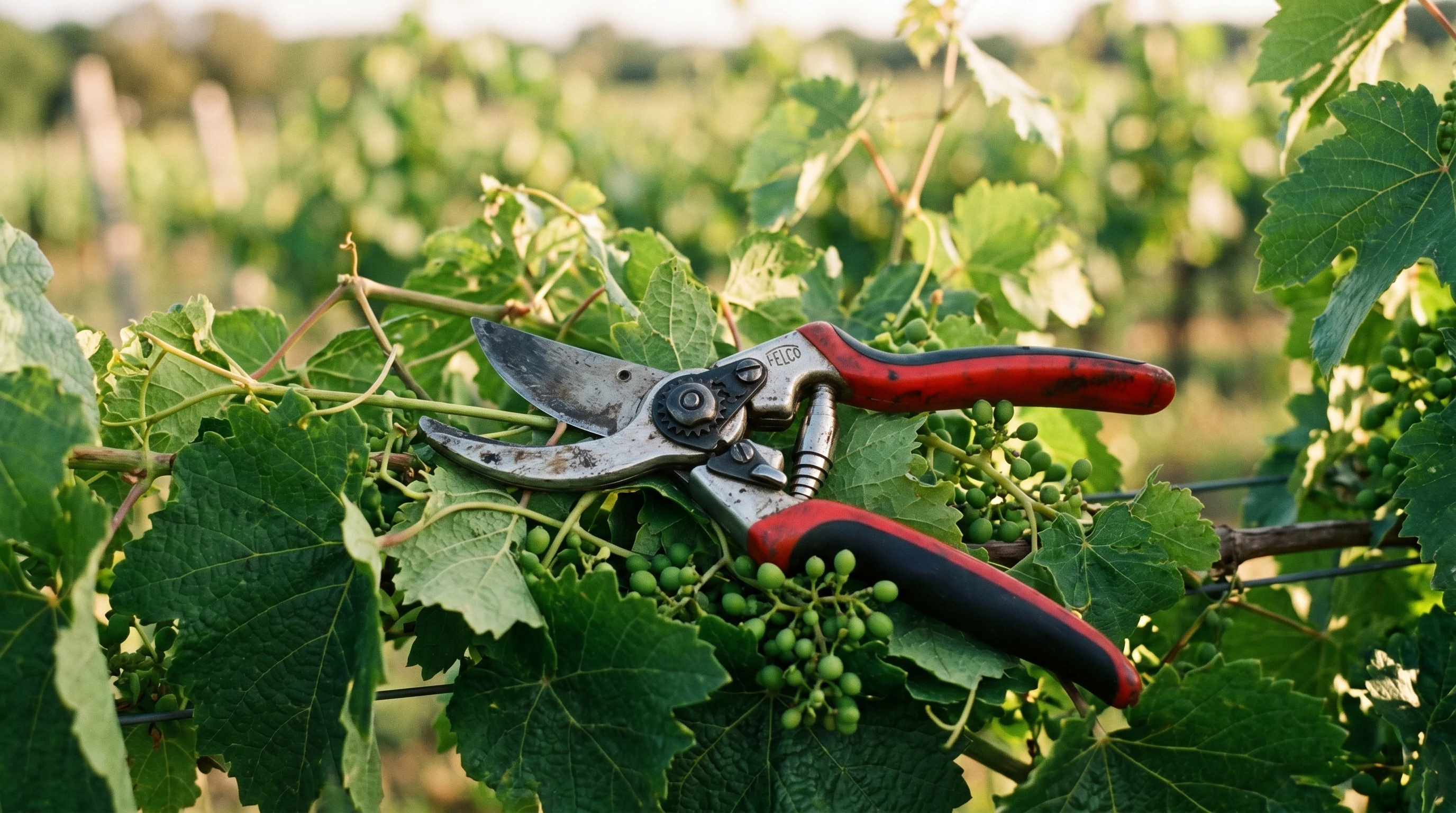
- Felco 2 Bypass Pruners: These are well known and beloved across vineyards everywhere. The robust design, replaceable blades, and reliably sharp edges make them a consistent favorite. I’ve found they cut through tough grapevine canes smoothly with minimal effort. They might be a bit more expensive, but they pay off if you do a lot of pruning.
- ARS HPVS8Z: These Japanese pruners are praised for being both lightweight and strong. The precise, razor-sharp blades make quick work of vine cuts, and the smooth action is a plus for anyone facing long days in the vineyard.
- Corona ClassicCUT Bypass Pruner: More budget-friendly than the above brands, but surprisingly dependable. The maintenance is easy, and they’re suited for smaller hands, too.
- Bahco PXM2: These customizable pruners are known for reducing hand fatigue. Multiple handle sizes and comfort features make them popular with anyone pruning all day long.
All these models use bypass blades, which really matters for clean, gentle cuts that let grapevines heal quickly. For more details, check out the Wine Spectator guide on pruning tools for a pro’s perspective.
What Pruning Shears Do Professionals Use?
If you stop by most commercial vineyards, you’ll notice Felco, Bahco, or ARS pruners are usually in hand. These brands are trusted because:
- The blades stay sharp through thousands of cuts and are easy to replace.
- Spare parts are widely available, making maintenance cheap and easy. You can swap out springs, blades, or handles if they wear down.
- Comfort features really do help—good ergonomics and cushioning take strain off your hands during long shifts.
Many pros actually carry two different pruners: a bypass pruner for live wood and a backup for older, harder canes. Holsters are super handy, so you don’t need to dig around your pockets while moving down the rows. Investing in prograde shears pays off fast, since using poor-quality tools often leads to sore hands or broken equipment by the end of the season.
Best Pruners for Fruit Trees: What’s the Difference?
Pruning fruit trees and grapevines is pretty similar because clean, sharp cuts are just as important for both. Bypass pruners are still the best pick. If your fruit trees have thicker branches (like apples or pears), you’ll need a pruner with a larger cutting capacity or a set of long-handled loppers. The Felco 2 and ARS HPVS8Z models are both suitable for orchard use. For heavier cuts, the Felco 7 (which features a rotating handle) or a ratcheting pruner provides extra leverage on thick limbs.
For folks who have a mix of fruit trees and grapevines, a sturdy, flexible bypass pruner saves the trouble of switching tools. A good one lasts for years and holds up no matter what you’re pruning.
How Do I Choose the Right Pruning Shears?
Here’s what to keep in mind when picking the right shears:
- How often do you prune? For daily or heavy seasonal use, go with a pro-grade model that’ll last.
- Budget considerations: There are solid shears under $40, but investing $60 to $80 will often get you a trusted pro pruner.
- Preference for tool weight: Lighter models reduce hand tiredness; make sure they’re not flimsy.
- Size of material you’ll be cutting: Most vineyards only need a ½-inch cutting capacity. Bigger? You’ll need loppers.
- Maintenance needs: It pays to stick with brands where sharpening and part replacement is a snap.
After trying a bunch of pruners, I pay attention to whether my hand aches after 30 minutes. The shape and feel of the handles make a huge difference, as does the angle and whether they’re cushioned. The resource Gardening Know How is also worth a look for honest takes on different shears and their real-world pros and cons.
Tips for Making Vineyard Pruning Easier
The right shears matter, but how you care for them is equally crucial for productive pruning:
- Sharpen blades regularly—at least once a week during peak season—to keep cuts smooth and vines healthy.
- Wipe down your blades—some mineral oil after cleaning keeps rust and sap off the edges.
- Have extra springs and blades on hand for quick repairs, especially with replaceable part models.
- Pruning gloves are a lifesaver during rough weather or heavy-pruning days to save your hands from blisters.
- A holster keeps your favorite shears nearby and helps you move through rows faster without setting tools on the ground.
Common Questions About Pruning Shears and Vineyard Maintenance
What are the best pruning shears for grapevines?
Felco 2, ARS HPVS8Z, and Bahco PXM2 offer a great combo of lasting sharpness, comfort, and cut quality for vineyard work.
What pruners do the pros really use for vineyards?
Most pros reach for bypass-style shears from brands like Felco, Bahco, and ARS. They provide reliable sharpness, easy access to replacements, and great comfort.
Do fruit trees require different pruners than grapevines?
Top-tier bypass pruners usually handle both jobs. For especially thick limbs on fruit trees, you’ll want to add a heavy-duty bypass pruner or a dedicated lopper to your toolkit.
How do I figure out which shears fit me best?
Think about how much pruning you’ll tackle, hand feel, ease of sharpening, and the average branch size. Please test some options before buying, as hand comfort varies widely between tools.
Final Thoughts
Successful vineyard pruning starts with good pruning shears that suit both your workload and hand preference. Brands favored by professionals—like Felco, Bahco, and ARS—make long-lasting, comfortable pruners that deliver sharp, clean cuts. Regular maintenance keeps them performing at their best, and grapevines respond much better to quick, smooth cuts. Don’t be afraid to experiment until you find a pair that feels just right—your hands (and your vines) will thank you when it’s pruning time.
There’s a right tool for every hand size and budget, so try a few and settle on the one that fits you best. Happy pruning, and here’s to thriving, healthy grapevines!